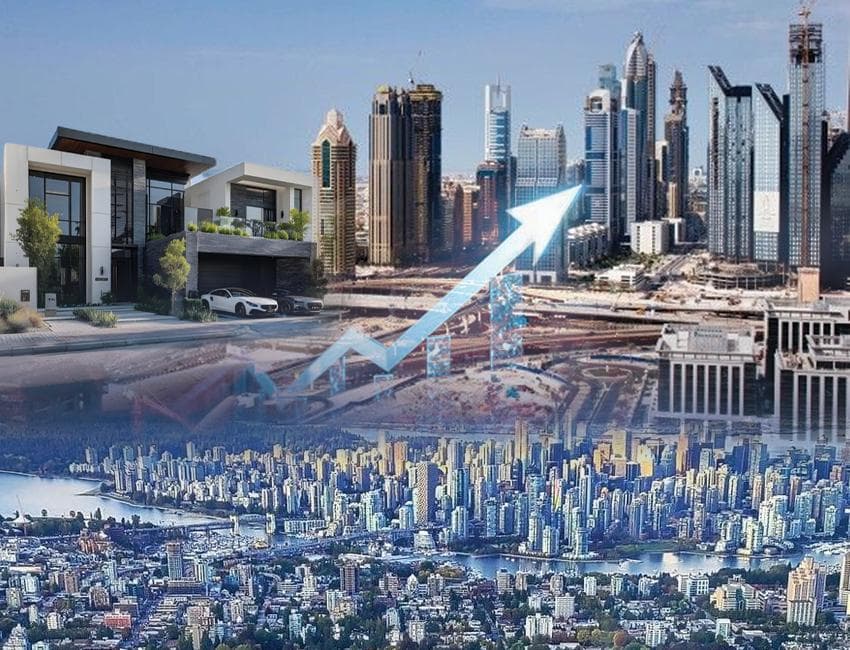
The real estate industry in India is going through a major shift away from an expansion based on volume to an older, value-driven growth model. This change is being fueled by a combination of reforms to the regulatory system, increasing institutional participation, a stronger balance of consumer sheets, and a significant shift in the housing market towards the luxury and premium segments.
These issues were discussed extensively during The ICC Real Estate Summit 2026 The theme was Powering India's R. 5 Trillion Dream", hosted by the Indian Chamber of Commerce (ICC) on the 20th of January at New Delhi, where policymakers as well as industry leaders and experts in real estate debated on the current dynamics in the sector and long-term prospects.
Market Maturity Replaces Volume-Driven Expansion
Information shared at the summit showed that overall, housing sales in the seven largest cities of India witnessed an increase in units in 2025, and the value of transactions was still rising. According to the ICC-ANAROCK study, "Indian Residential Real Estate: A Review and Road Ahead", Residential sales decreased by about 14% over the course of the year to 3.96 lakh units, but the total value of transactions increased by nearly 6percent by crossing INR six lakh crore.
This apparent divergence is a clear indication of an economic shift--buyers are investing in homes that have higher values that reflect a higher level of purchasing ability, changing expectations, and a greater faith in the stability of the sector's future.
Regulatory Stability as a Growth Enabler
The summit was officially opened with the help of Sanjay R. Bhoosreddy, IAS, Chairperson of the Uttar Pradesh Real Estate Regulatory Authority (UP RERA). He stressed the importance of clear regulation and good governance to sustain growth.
He stressed that housing remains vital and real estate is set to be among the key factors in India's growth in the coming years. In the state of Uttar Pradesh, the sector is already contributing between 13 and 15% of the state's GDP, which is significantly above the average for national growth.
Bhoosreddy said that speedier approvals for projects, tighter compliance procedures, and transparent improvements under RERA have aided in restoring confidence in the consumer while also boosting confidence in developers. He said that the primary focus is still on prompt delivery as well as accountability and the creation of an environment that is business-friendly and supports sustainable and sustainable growth.
Luxury Housing Takes Centre Stage
A standout among the changes that was the subject of discussion at the Summit was the drastic shift in the demand composition. Anuj Puri, Chairman and Founder of ANAROCK, said that the market has experienced an important rebalancing process over the last few years.
Homes priced under INR 75 lakhs, once the largest portion of residential sales, have experienced a decline in their market share. Contrastingly, the luxury and ultra-luxury home segments have grown rapidly thanks to increasing household incomes, better accessibility, lifestyle improvements, and a growing preference for bigger, more luxurious homes.
The most expensive homes that cost more than INR 4 crore currently account for 18-20% of the total residential sales in the top seven cities - an astounding rise compared to pre-pandemic rates. The most notable aspect is the increase in the ultra-luxury category that has properties valued at around INR 40 crore and more, experiencing a significant increase in sales by 2025. It is worth noting that the Mumbai Metropolitan Region emerged as the leading region, generating nearly 70% of all these expensive transactions.
Read More: Luxury Housing Adopts Integrated Living for Modern Buyers
Changing Buyer Preferences Redefine Housing Demand
The report of the ICC-ANAROCK also highlighted a distinct shift in buyer preferences. Changes in lifestyle post-pandemic, as well as hybrid work models and an increased focus on health, have significantly influenced the choices for homes.
3BHK and bigger configurations currently comprise nearly 45-50% the total demand for housing, in contrast to around 30% in the year 2018. Buyers are seeking spacious designs, top amenities, including gardens, as well as wellness infrastructure and a unified community lifestyle over small, budget-friendly homes.
According to Dr. Rajeev Singh, Director General for the Indian Chamber of Commerce, this shift in structure is a reflection of larger socio-economic shifts. While the Tier I cities remain anchored by the market, Tier II markets are growing in popularity as improvements to infrastructure connectivity, as well as employment opportunities, attract wealthy buyers who want a higher standard of living.
Institutionalisation Strengthens the Supply Side
On the supply front, the Indian real estate sector is witnessing increasing institutionalisation. Developers listed on the Listed and Grade A list now make up more than 45% of all residential property supply, an eerily stark contrast to the fractious, unorganised market structure that existed in the past.
This shift is driven by increased access to institutional capital and private equity investment in REITs, and better standards of governance for corporations. Developers with solid balance sheets, capabilities to execute, and compliance records are increasing market share while less reputable players quit or merge.
Real Estate as a Nation-Building Engine
In his keynote address to the industry, Amarjit Bakshi, Managing Director of Central Park, described real estate as much more than just a business. It is an engine of nation-building that affects the development of infrastructure, employment, urbanisation, and economic resilience.
Bakshi said that creating value over the long term in the real estate industry is contingent on the quality of service, integrity, and trust. Bakshi believes that all stakeholders, from developers to architects to financiers and policymakers, have the responsibility of ensuring that the growth of real estate is sustainable and in line with the national development objectives.
Strong Macro Fundamentals Support Long-Term Outlook
Despite global turmoil, the real estate industry in India is still benefiting from strong macroeconomic fundamentals. Growing private consumption, steady infrastructure investment, urban migration, and the relatively low ratio of mortgages to GDP of about 11% offer plenty of room for growth in the future.
In addition to policy continuity, the digitization of land documents, simplified approval processes, and financial discipline as part of RERA have all contributed to improving investor confidence and transparency.
A Strategic Pillar of Economic Growth
With high-level panels on residential policy as well as commercial real estate finance trends, as well as digital changes, the ICC Real Estate Summit reinforced the idea that Indian real estate has become only a cycle-driven industry.
It has transformed into a key pillar of economic growth, playing a crucial role in capital formation, urban transformation, and the journey of India towards becoming a one-stop Rs. 5 trillion-plus economy.
As the industry embraces value-driven expansion, luxury housing, and institutional maturation, executives are convinced that Indian real estate will be in a good position to provide sustainable, resilient, and inclusive growth in the years to come.
Read More: Rprealtyplus