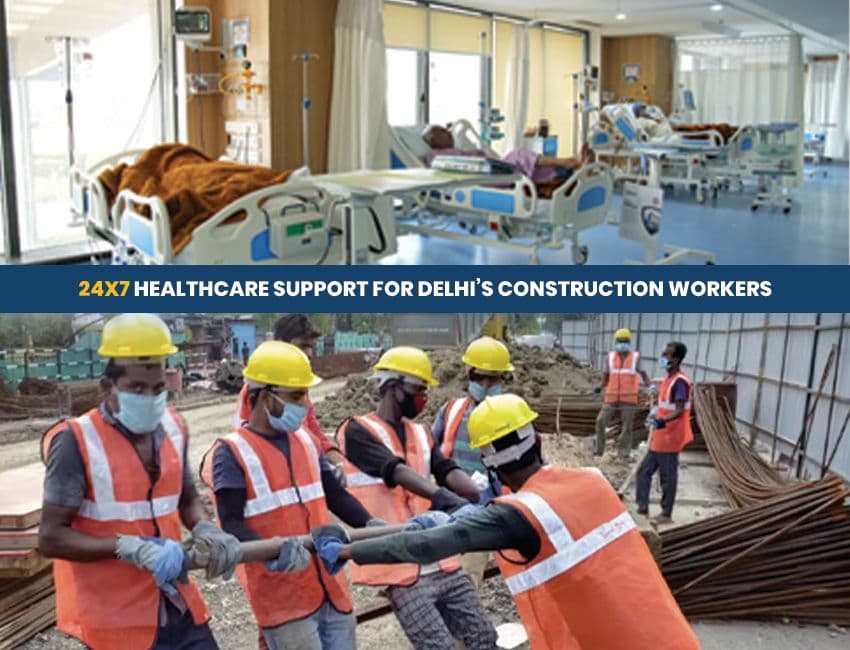
New Delhi: In a major welfare initiative for the construction workforce, the Delhi government is preparing to introduce a dedicated healthcare scheme for registered construction workers across the capital. The proposed Delhi Building Workers Health Scheme is expected to provide round-the-clock medical assistance, free annual health check-ups, cashless hospitalisation and on-site medical support to around 2.7 lakh registered construction workers.
The initiative has been planned to address the health challenges faced by construction workers, who frequently work in physically demanding and hazardous environments. Exposure to extreme weather, workplace injuries and other occupational risks can create significant health concerns for workers and their families.
Under the proposed scheme, workers will be able to access a wide range of healthcare services without having to bear the entire financial burden themselves. The programme is expected to become operational before the end of the year.
Delhi Building Workers Health Scheme to Provide Comprehensive Healthcare
The Delhi Building and Other Construction Workers Welfare Board has begun the process of implementing the healthcare programme. The government plans to appoint an agency that will manage and coordinate the delivery of medical services under the scheme.
The primary objective is to make healthcare more accessible to construction workers and ensure that medical problems are identified and treated at an early stage. The scheme will combine preventive healthcare, outpatient services, hospitalisation and emergency assistance.
For workers who often face financial difficulties when dealing with unexpected medical expenses, cashless treatment could provide considerable relief. Instead of arranging money before receiving treatment, eligible beneficiaries will be able to receive cashless services at hospitals empanelled under the programme.
Up to ₹2 Lakh Treatment Cover for Workers
One of the major features of the proposed Delhi construction workers health scheme is the annual treatment coverage.
Each eligible beneficiary will receive healthcare coverage of up to ₹2 lakh in a financial year. In addition, the maximum healthcare coverage available to a family will be ₹10 lakh.
The coverage is expected to include important medical expenses such as diagnostic tests, medicines and hospitalisation. This could help workers manage both routine healthcare requirements and major medical expenses.
The cashless facility will be available at empanelled hospitals, meaning beneficiaries will not generally need to make upfront payments for covered treatment.
Healthcare Benefits for Workers and Their Families
The proposed scheme is not limited to the registered worker alone. Annual health screening will be provided to workers and their spouses, while eligible family members will also have access to outpatient and inpatient treatment.
This family-oriented approach is designed to reduce the financial pressure that medical emergencies can place on construction-worker households.
OPD services will allow beneficiaries to seek treatment for illnesses that do not require hospital admission, while IPD facilities will cover cases requiring inpatient care.
Free Annual Health Check-Ups for Construction Workers
Preventive healthcare will form an important part of the new programme. Workers and their spouses will be eligible for free annual health screenings.
Construction workers may be exposed to dust, physical strain, heat and other workplace conditions that can affect their health over time. Regular medical examinations can help identify potential health problems before they become more serious.
The agency selected by the government will work with diagnostic laboratories to conduct these examinations. At least six laboratories across Delhi are expected to be established or utilised for processing samples collected during health check-ups.
The programme also requires beneficiaries to receive physical copies of their test reports within seven working days after their samples are collected.
Mobile Medical Vans to Visit Construction Sites
Another important element of the scheme will be the deployment of mobile medical vans at construction sites and other designated locations across Delhi.
These units are intended to bring basic healthcare closer to workers instead of requiring them to travel to a hospital for every medical issue.
The mobile vans will be equipped with essential medical equipment, first-aid materials, emergency medicines, and basic life-support facilities. Each vehicle will have a nurse who can assess workers suffering from injuries or illness and provide immediate assistance.
If a worker requires more advanced treatment, the medical team will stabilise the patient where necessary and arrange a referral to the nearest empanelled hospital.
Medical Vans Could Assist 80–100 Beneficiaries Daily
The proposed mobile healthcare units are expected to operate for around eight to 10 hours a day. Each unit could assist approximately 80 to 100 beneficiaries daily.
Apart from providing first aid and basic medical assistance, these vans will also play a role in spreading awareness about the healthcare scheme. Medical teams can inform construction workers about available benefits, health screening, and the process for accessing treatment.
This on-site approach could be particularly useful for workers who may find it difficult to leave construction sites during working hours to visit healthcare facilities.
24x7 Medical Assistance for Emergencies
The proposed programme will also provide access to medical assistance around the clock. This is particularly significant for construction workers because accidents and medical emergencies can occur at worksites at any time.
For serious emergencies, beneficiaries will generally be directed to empanelled hospitals. However, in exceptional circumstances, workers may seek emergency treatment at the nearest non-empanelled hospital.
In such rare emergencies, the hospital may be provisionally treated as an empanelled facility for the limited purpose and duration of emergency treatment.
This provision is intended to ensure that workers do not have to delay urgent medical care simply because the nearest hospital is outside the regular empanelled network.
Digital Health Records to Track Medical History
The Delhi Building Workers Health Scheme will also incorporate a digital healthcare system. A digital health record will be created for beneficiaries, allowing their medical information to be maintained electronically.
Electronic medical records are expected to be accessible through a central cloud-based dashboard developed for the welfare board.
A centralised digital system could make it easier to maintain health records, monitor medical services and track healthcare utilisation. It could also help improve coordination between beneficiaries, healthcare providers and the welfare board.
Empanelled Hospitals, Clinics and Diagnostic Centres
Healthcare services under the programme will be delivered through a network of empanelled hospitals, clinics and diagnostic laboratories.
Workers will be able to access covered treatment at these facilities without making upfront payments for eligible cashless services. Inpatient treatment will be available at empanelled hospitals in general wards or designated rooms.
The agency managing the scheme will be responsible for coordinating healthcare delivery and ensuring that beneficiaries can access the services promised under the programme.
Scheme Aims to Reduce Healthcare Burden on Construction Workers
Construction workers form an important part of Delhi's urban development and infrastructure sector. However, the nature of their employment can expose them to physical injuries, demanding working conditions and weather-related health risks.
The proposed healthcare programme aims to address these challenges by combining insurance-style financial protection with preventive care and immediate medical assistance.
The ₹2 lakh individual annual treatment cover and ₹10 lakh family coverage could provide significant financial support to eligible households, particularly during major medical emergencies.
Monitoring Committee Proposed for Implementation
To ensure that the programme is implemented effectively, the welfare board has proposed establishing a project monitoring committee.
The committee would oversee the administration and implementation of the health scheme and monitor whether healthcare services are being delivered as planned.
The appointment of an implementation agency, empanelment of healthcare facilities, deployment of mobile medical units and creation of digital health records will be key components of the rollout.
What the Delhi Construction Workers Health Scheme Means for Workers
If implemented as proposed, the scheme could significantly expand healthcare access for Delhi's registered construction workforce. Workers would have access to preventive check-ups, OPD and IPD treatment, cashless hospitalisation, emergency support and mobile medical assistance.
With approximately 2.7 lakh registered construction workers expected to benefit, the programme could become an important welfare measure for one of Delhi's essential workforce groups.
The combination of on-site medical support, annual health screening and financial coverage is aimed at making healthcare both more accessible and affordable for construction workers and their families.
As the Delhi government moves ahead with the implementation process, the appointment of the healthcare agency and development of the hospital and diagnostic network will determine how quickly beneficiaries can begin accessing these services. The scheme is expected to start providing benefits before the end of the year, subject to the completion of the implementation process.
Read More: Delhi Master Plan 2047: Will New Housing Supply Change the Property Market in Noida and Gurugram
Source: India Times