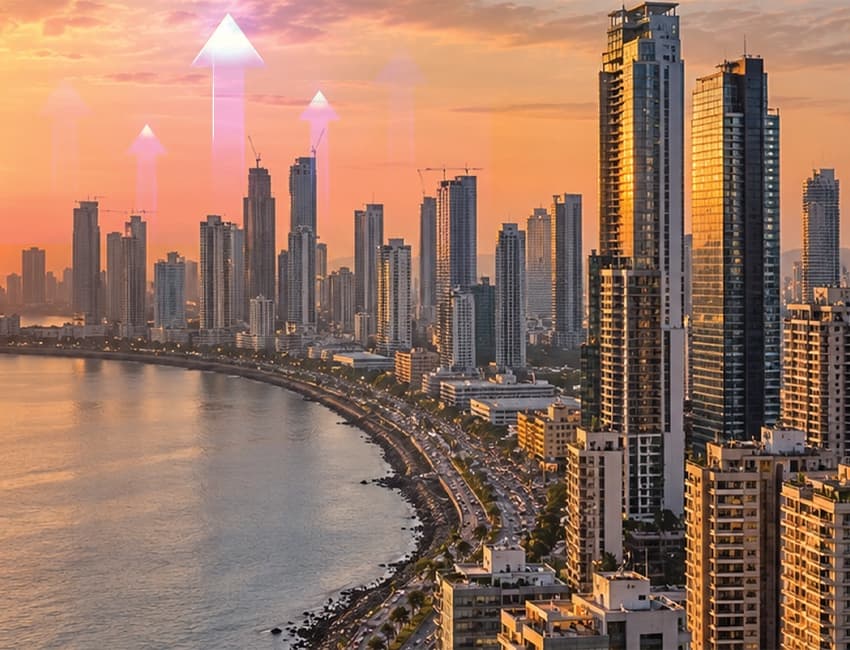
Mumbai: The Brihanmumbai Municipal Corporation's (BMC) Improvements Committee has cleared a proposal to relax building height restrictions on narrow roads across the city. This forms part of a proposed amendment to the Development Control and Promotion Regulations (DCPR 2034). Final approval is still awaited from the Maharashtra State Urban Development Department.
If it is implemented, the plan will significantly increase redevelopment opportunities and enhance land utilization in the densely populated areas of Mumbai.
What Has Changed in the Proposal?
The construction of high-rises in Mumbai was only permitted on roads with at least 9 meters wide. This policy was designed to facilitate access for emergency services, such as ambulances and fire engines.
Under the proposed graded-height relaxation:
-
Constructions built that are built on 3.6-metre-wide roads can be up to 32 meters (approximately 10 storeys)
-
The construction of buildings that are built on 4.5-metre-wide roads can reach up to 70 meters (21-23 floors)
-
Roads that measure 6 meters wide can reach up to the 120-metre mark (31-32 stories)
-
Roads of 9 metres or greater will be permitted to continue to permit structures over 120 metres
Safety Norms Remain Strict
Despite the proposal to relax height limits, safety is an important consideration. Every project will need to adhere to the fire safety rules, which include: completely
-
Mandatory Not Objection Certificate (NOC) issued by the Fire Brigade
-
Appropriation from the High-Rise Committee (where applicable)
-
Complete compliance with the prescribed fire safety guidelines and emergency access rules
Officials have stated that permits can only be granted following an exhaustive verification of all security measures.
Impact on Redevelopment and Real Estate
Mumbai has more than 40,000 structures that are over 30 years old. A lot of them are in dire need of renovation. For instance, in South Mumbai, several structures are between 70 and 80 years old. Redevelopment of these structures was usually halted because of the narrow access roads, poor Floor Space Index (FSI), and the strict height requirements.
If the plan is approved, then it will be anticipated that it will:
-
Redevelopment accelerates the deterioration of old buildings
-
The number of new homes
-
Offer more housing options in prime, previously limited locations
-
This could help stabilize prices for properties due to the increase in supply
Expert Opinions: Opportunities and Concerns
Real estate and urban planning experts have praised the plan; however, they have also raised crucial issues.
Planner for the town, Pankaj Joshi, emphasized that building levels should be increased only after a proper infrastructure, particularly for emergency services, has been put in place.
Key Challenges:
-
Traffic congestion is getting worse in already congested areas
-
Additional cost on the water supply, sewage system, and electric systems
-
The difficulty of ensuring access to emergency services during emergencies
-
The risk of over-densification
Some experts have recommended that the government should simultaneously upgrade the civic infrastructure in order to facilitate this vertical expansion.
What does this mean for Homebuyers?
If the plan is approved for final approval, homebuyers could be able to benefit from:
-
New homes
-
There are more options for redeveloped communities with modern facilities
-
Possibly better price negotiations because of the increased supply
-
Easy access to home loans for planned housing projects
Future Outlook
The proposal was approved by the BMC's Improvements Committee and is now waiting for final approval from the state's city development department. After being approved, the plan could transform Mumbai's skyline and establish a precedent in other Indian cities with similar land restrictions.
Conclusion
The plan to permit high-rise construction on narrow roads is an important step toward urban change in Mumbai. Although it presents substantial opportunities for redevelopment and the expansion of housing, its success will depend largely on how well infrastructure development can keep up with the increasing construction activity.
Source: India Times