The Delhi Development Authority (DDA) has stepped up consultations on the implementation of the Master Plan for Delhi 2047, bringing industry representatives, commerce bodies and resident welfare associations into discussions on how the capital’s long-term urban development framework should be implemented.
The latest consultations focused on two areas with direct implications for Delhi’s real-estate and development landscape: promoting industrial activity and enabling redevelopment of ageing residential societies. The discussions also covered greater private-sector participation, the use of DDA land and planning provisions intended to improve the utilisation of existing residential areas.
Industry Bodies Discuss Private-Sector Participation
Representatives from several well-known business and industry organizations attended the stakeholder engagement.
Confederation of Indian Industry (CII), Federation of Indian Chambers of Commerce and Industry (FICCI), PHD Chamber of Commerce and Industry, ASSOCHAM, and Delhi State Industrial and Infrastructure Development Corporation (DSIIDC) were among the organizations that took part.
The meeting examined provisions under MPD 2047 aimed at supporting industrial development in Delhi. DDA officials explained relevant provisions and the framework proposed for facilitating industrial activity.
A key part of the discussion concerned provisions related to making DDA land available to the private sector. The consultation also addressed the Institutional Social Responsibility (ISR) framework included in the planning framework.
The discussions are significant for developers and businesses because land availability and development regulations are central factors in determining where new industrial and commercial activity can take place.
Participating stakeholders also shared suggestions, views and feedback regarding the implementation of the Master Plan.
Redevelopment of Older Housing Societies Comes Into Focus
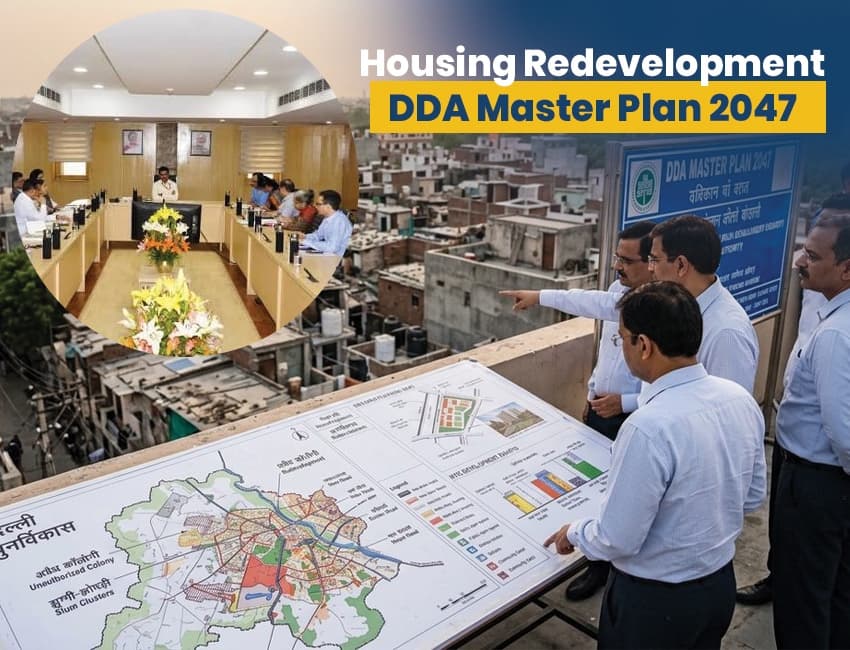
A separate consultation with Resident Welfare Associations (RWAs) focused on the redevelopment of existing residential developments and group housing societies.
DDA officials briefed representatives about provisions dealing with ageing neighbourhoods and older housing societies, particularly properties that are more than 50 years old or have structural safety concerns.
The redevelopment discussion included several planning mechanisms, such as Transit-Oriented Development (TOD), Floor Area Ratio (FAR), incentivised FAR and the rationalisation of density restrictions.
The aforementioned laws aim to facilitate planned redevelopment and optimize land utilization in established areas of the city. The framework also takes into account elements like waste management, parking, open spaces, road connectivity, plot amalgamation, and sustainable development.
As tenants and developers choose whether older buildings can be renovated or completely redeveloped, these planning provisions may become especially important for older housing societies.
RWAs Seek Easier Approvals and Safety Assessments
Resident representatives also raised concerns about the practical challenges involved in redevelopment.
Among the suggestions discussed were demands for higher permissible FAR and a single-window mechanism for obtaining approvals from different government agencies.
In order to ascertain the state of older buildings and whether renovation could be necessary, representatives also asked for structural safety evaluations.
Coordinating approvals and clearances involving several government agencies is one of the difficulties connected with big rehabilitation projects that may be addressed by a simplified approval process.
Stakeholder conversations, however, are a component of the larger consultation and implementation process.
Individual redevelopment projects will continue to be subject to applicable planning regulations, approvals and statutory requirements.
What MPD 2047 Means for Delhi’s Property Market
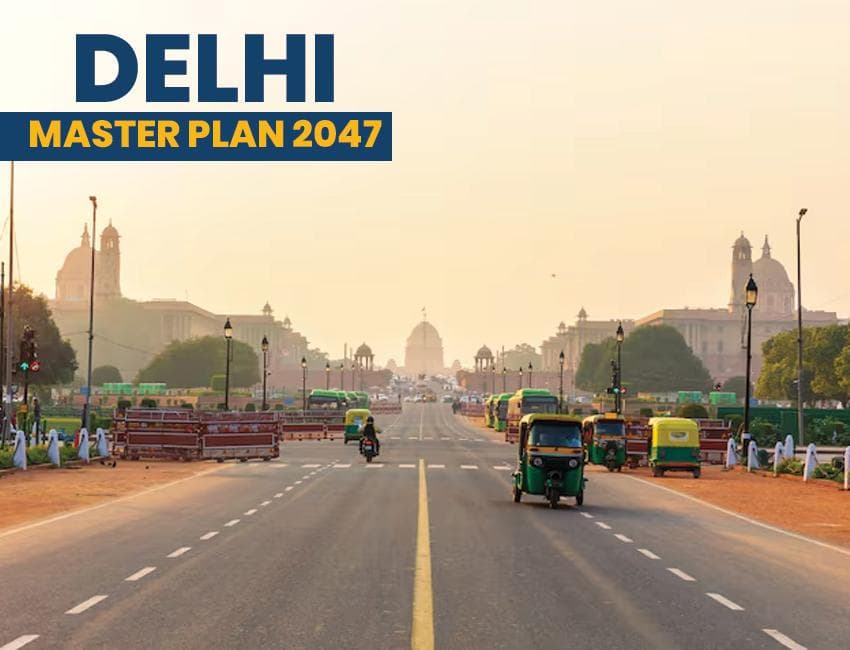
A long-term planning framework for the development of the capital through 2047 is provided by the Master Plan for Delhi 2047. Land use, redevelopment, transit-oriented development, land pooling, and infrastructure planning are some of the facets of urban growth that are covered.
The most recent stakeholder meetings for the real estate industry highlight a number of issues that may influence future development initiatives.
Redevelopment of ageing housing: Older group housing societies could receive greater attention as Delhi seeks to modernise established residential areas and improve the use of existing urban land.
Private-sector participation: Discussions around DDA land and private-sector involvement could create new development opportunities within the framework of the Master Plan.
Industrial development: The focus on industry indicates that MPD 2047 is also being positioned as a framework for supporting economic activity and facilitating industrial development.
Development density: FAR and related density provisions are important to redevelopment projects because they determine the amount of permissible built-up space, subject to applicable regulations.
Infrastructure and liveability: Parking, roads, open spaces, waste management and sustainable development are also part of the residential redevelopment discussions. This indicates that redevelopment is being considered alongside supporting infrastructure and urban services.
DDA Continues Stakeholder Outreach
The recent meetings are part of the DDA’s broader stakeholder consultation programme for implementing MPD 2047.
The engagement with industry organisations and residential representatives reflects the wide range of interests involved in implementing a citywide master plan.
Residents and housing societies are concentrating on redevelopment standards, structural safety, and approval procedures, while businesses want more clarity on industrial development and private-sector involvement.
It is anticipated that the Master Plan for Delhi 2047 will have a significant impact on how the capital develops and modernizes in the ensuing decades.
Homeowners, housing societies, developers, investors, and companies will keep a careful eye on the specific regulations and how they are applied at the project level as implementation moves forward.
For Delhi’s real-estate sector, the focus will remain on how the provisions of MPD 2047 translate into actual redevelopment projects, new development opportunities, improved infrastructure and changes in land use across the capital.
Read More: Property Prices Increase across the 15 Indian Cities for H1 2026. Faridabad, Delhi Lead with a growth rate of 18%
Source: realty.economictimes