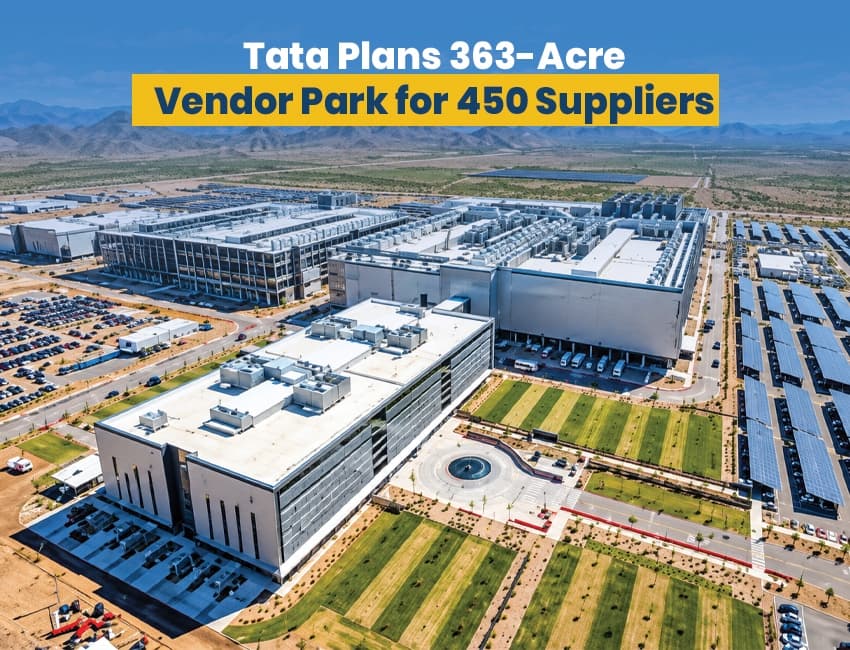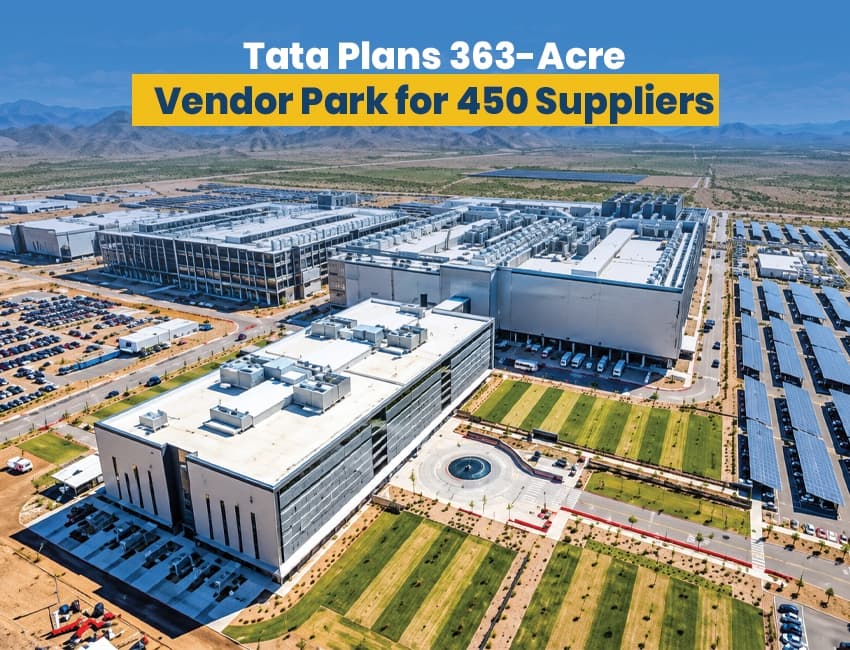
Tata Electronics is developing a dedicated vendor ecosystem around its upcoming semiconductor fabrication facility in Dholera, Gujarat, with plans to accommodate about 450 suppliers in close proximity to the plant. The company is working on a 363-acre plug-and-play vendor park that is expected to provide the infrastructure required by domestic as well as international suppliers.
The development was highlighted during SEMICON India 2026, where Tata Electronics executives outlined the importance of building a reliable and geographically concentrated supply chain around the Dholera fabrication facility. The semiconductor plant itself involves an investment of around ₹91,000 crore and is being positioned as a major component of India's emerging semiconductor manufacturing ecosystem.
The proposed vendor park is also significant from a real-estate and industrial development perspective, as it could bring a large number of semiconductor-related companies, specialized facilities and supporting infrastructure to the Dholera region.
450 Suppliers Expected to Support Dholera Fab
According to Tata Electronics Senior Vice President for Strategy and Business Development Utpal Shah, the Dholera fabrication plant is expected to be supported by roughly 450 suppliers. These suppliers are likely to include both Indian companies and international firms involved in providing materials, equipment, maintenance services, and other critical inputs.
Shah explained during a panel discussion at SEMICON 2026 that suppliers will need to maintain a presence close to the fabrication facility because semiconductor manufacturing requires highly dependable and uninterrupted operations. The plant is capital-intensive, making rapid access to maintenance services, replacement components, and essential materials particularly important.
For a semiconductor fab, the supply chain extends beyond conventional industrial inputs. Specialty chemicals, gases, spare parts, equipment support, and other materials required to maintain production systems may all fall under this category.
When repairs or replacements are required, having these suppliers close by can help speed up response times and reduce logistical delays. Instead of completely relying on suppliers who are located further away, this requirement is driving the development of a dedicated industrial ecosystem.
363-Acre Plug-and-Play Vendor Park Planned in Dholera
Tata Electronics is developing a 363-acre vendor park in Dholera in partnership with a Singapore-based developer. The proposed site is intended to offer a ready-to-use industrial environment for companies that will support the semiconductor fab.
The park is planned as a plug-and-play development, meaning prospective suppliers are expected to have access to essential infrastructure without having to build every basic facility from scratch. The planned infrastructure includes power, water, utilities, and roads. In certain cases, building shells may also be made available to companies setting up operations within the park.
The model could help semiconductor suppliers establish operations more quickly and create a concentrated industrial cluster around the main fabrication facility.
For Dholera, the project represents another layer of industrial development beyond the core semiconductor plant. A dedicated supplier zone can potentially support demand for industrial buildings, utilities, logistics services and other ancillary infrastructure associated with semiconductor manufacturing.
₹91,000-Crore Fab Drives Demand for a Strong Supply Chain
Tata Electronics' Dholera semiconductor fab is being developed with an investment of approximately ₹91,000 crore, making it one of the country's largest semiconductor manufacturing projects. The Government of India has also committed fiscal support under the semiconductor manufacturing programme. The project is planned to have a production capacity of 50,000 wafers per month and is expected to create more than 20,000 direct and indirect skilled jobs, according to government information.
The facility is being developed in partnership with Taiwan's Powerchip Semiconductor Manufacturing Corporation, which is providing technology and execution support. Tata has said the fab will serve markets including automotive, computing, communications and artificial intelligence.
The scale and technical requirements of the facility mean that its supporting ecosystem will be considerably broader than the main manufacturing unit. Suppliers will be required to provide everything from materials and chemicals to engineering, maintenance and other specialized services.
Partnerships Expand the Dholera Semiconductor Ecosystem
The Dholera Semiconductor Ecosystem Grows as a result of Partnerships. SEMICON India 2026 served as a platform for Tata Electronics to announce a number of partnerships with the intention of strengthening various aspects of its semiconductor supply chain.
Wafer fabrication, semiconductor assembly and testing, technology collaboration, and ecosystem development were among the most important agreements with Nexperia. The goal of the partnership is to improve India's semiconductor manufacturing and supply chain capabilities. In addition, Tata Electronics signed a strategic agreement with Fujifilm to help the Dholera fab's semiconductor materials ecosystem grow.
The collaboration focuses on developing and supplying advanced semiconductor materials and localising critical raw materials needed for manufacturing. Fujifilm has said its expertise covers materials used across different stages of semiconductor production.
Another agreement with Besi is focused on advanced semiconductor packaging capabilities at Tata Electronics' facility in Jagiroad, Assam. Such partnerships are intended to connect fabrication, packaging and other stages of the semiconductor value chain within India.
Focus on Localisation and Semiconductor Skills
Tata Electronics is also working with Indian institutions to develop domestic capabilities in semiconductor technology and human resources.
An agreement with the state-run Semiconductor Laboratory is focused on areas such as chip design, process technologies, supply-chain localisation and talent development. The objective is to increase domestic capabilities across different parts of the semiconductor manufacturing process.
The company has also partnered with Gati Shakti Vishwavidyalaya to develop specialised talent for semiconductor manufacturing, infrastructure, project management and supply-chain operations.
These initiatives indicate that the planned Dholera ecosystem will require not only industrial infrastructure but also a workforce with specialised technical and operational skills.
Dholera Emerging as a Semiconductor Manufacturing Hub
The planned vendor park adds another dimension to Dholera's development as a major industrial destination. Rather than functioning solely as the location of a large semiconductor fab, the area is being developed to accommodate a network of companies that can supply and support the facility.
The concentration of suppliers could help reduce transportation distances for critical materials and services while providing companies with access to common industrial infrastructure. It could also encourage additional semiconductor-related businesses to consider establishing operations in the region.
Tata Electronics has indicated that its Dholera fab and its semiconductor packaging facility in Assam remain on track against their commitments to the government. Meanwhile, new partnerships with global companies and Indian institutions are expanding the ecosystem around the projects.
For Dholera's real-estate and industrial sectors, the proposed 363-acre vendor park could therefore become an important component of the region's wider manufacturing expansion. As around 450 suppliers prepare to support the semiconductor facility, demand is expected to extend beyond the main fab into specialised industrial spaces, utilities, logistics and supporting services.
The development underscores how semiconductor manufacturing requires an extensive ecosystem around the primary plant. With Tata Electronics building both the fab and its surrounding supplier network, Dholera is being shaped into a more integrated semiconductor manufacturing cluster in Gujarat.
Read More: Dholera Smart City Project 2026: Investment Opportunities & Future Growth
Source - https://money.rediff.com