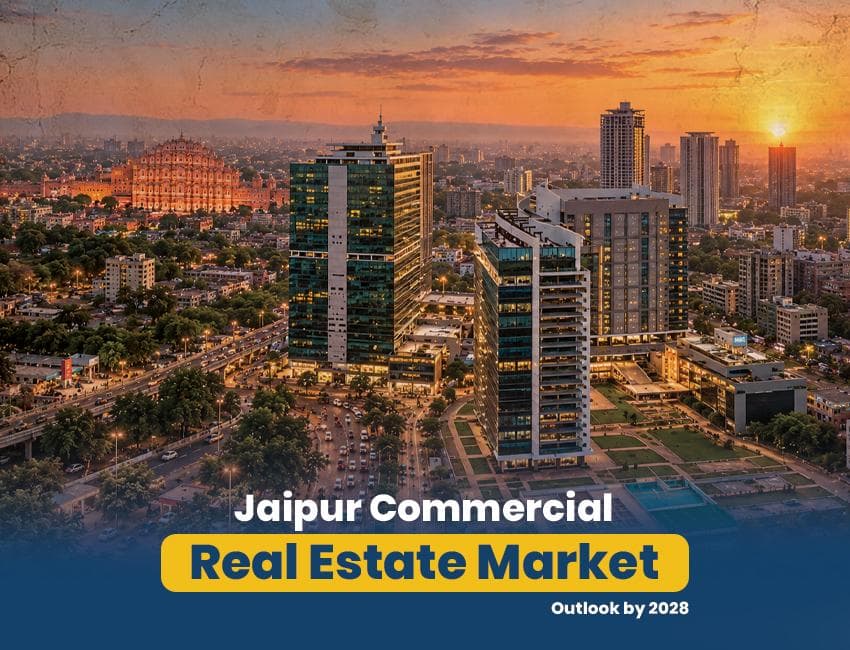
Jaipur's commercial real estate market is gaining attention as businesses explore opportunities beyond India's major metropolitan cities. According to an assessment by property consultancy JLL, the city is expected to see additional office, retail, and warehousing space by 2028. Its connectivity, availability of skilled professionals, and comparatively lower operating costs are supporting its appeal among businesses. However, the market's future growth will depend on how effectively new developments attract tenants and sustain demand.
Jaipur Office Space Market: Supply, Rentals and Demand
According to JLL, Jaipur has approximately 9.7 million square feet of operational office space, with monthly rentals ranging from ₹45 to ₹95 per square foot. Rental values vary depending on the location, building quality, and available facilities. This existing office stock provides businesses with options across different commercial locations and rental budgets.
JLL estimates that an additional 3.32 million square feet of office space could enter Jaipur's commercial property market by 2028. This planned expansion reflects developers' expectations of future demand from businesses. However, the pace at which companies lease the newly completed space will be an important factor in determining the market's performance.
Clients in Jaipur span a variety of sectors, including technology and IT-enabled services, banking, finance and insurance (BFI), and logistics. A wide client base reduces the market’s risk exposure to any single industry.
Why Are Businesses Choosing Jaipur for Commercial Expansion?
Jaipur's connectivity with Delhi and the National Capital Region (NCR) makes it a potential location for businesses looking to expand beyond major metropolitan markets. Improvements in road and air connectivity, access to skilled professionals, and comparatively lower operating expenses can make the city attractive to companies evaluating new office locations. These factors may also help businesses manage costs while maintaining access to a growing regional market.
Mukesh Choudhary, managing director of Accuspace, believes Jaipur has the potential to attract larger corporate occupiers and Grade A office developments. Policy support and improvements in local infrastructure could further strengthen the city's position as a commercial destination. The extent of this growth will depend on businesses' leasing decisions and the timely development of suitable office spaces.
In the last few years, Choudhary says, companies have shifted or established their offices in Jaipur because of its improved connectivity, talent pool, and quality of life. He says Jaipur is even more appealing because it costs less than metros and large Tier II cities.
Aggarwal says that while Jaipur is further along in its development compared to other cities in North India, similar shifts are occurring there as well, with the improvement of infrastructure and transportation and the steady growth of the talent pool.
Southern Jaipur is the fastest-growing area, says Choudhary, with the development of Tonk Road, Sitapura, and the Ajmer Road corridor.
Major Commercial Business Districts in Jaipur
Jaipur's commercial real estate activity is spread across three broad business districts, each serving different business requirements.
- Central Business District: This area accommodates financial institutions, corporate offices and premium hospitality establishments.
- Secondary Business District: Locations such as C-Scheme, Civil Lines, Ajmer Road, Malviya Nagar, JLN Marg, Vidyadhar Nagar and Tonk Road offer a mix of commercial and business facilities.
- Peripheral Business District: Areas such as Sitapura, Jagatpura and Mahindra City are associated with industrial activity and technology-related businesses.
The suitability of each district depends on factors such as connectivity, workforce access, rental budgets and the operational needs of individual businesses.
Jaipur's Flexible Workspace Market and Office Vacancy Trends
Flexible workspaces are becoming an additional component of Jaipur's commercial office market. According to JLL, the city has approximately 11,000 flexible workspace seats, with another 3,150 seats expected in the coming quarters. These arrangements can offer start-ups, small businesses and larger enterprises greater flexibility when selecting office space. Future growth in this segment will depend on business expansion and demand for adaptable workplace solutions.
JLL estimates that Jaipur's office vacancy rate is approximately 24%. This indicates that a portion of the city's existing office inventory remains available for leasing. The addition of new office developments could increase the available supply further, making future vacancy trends dependent on the pace of tenant demand and space absorption. Current conditions indicate that tenants are showing preferences for some office spaces; however, a large increase in office supply in the next couple of years is expected to steadily increase vacancy rates.
Jaipur Retail Real Estate: Mall Supply and Rental Trends
Jaipur's organised retail market has approximately 4.9 million square feet of operational mall space, according to JLL. The estimated mall vacancy rate is around 16%. These figures provide an overview of the existing retail property market, while future performance will depend on retailer demand, consumer activity and the availability of suitable retail locations.
According to the source report, mall rentals in Jaipur range from approximately ₹100 to ₹280 per square foot per month. Actual rental values depend on the mall, location, unit size and quality of the retail space. Businesses evaluating retail properties should also consider footfall, accessibility, tenant mix and operating expenses when comparing rental options.
JLL expects approximately 0.9 million square feet of additional mall space to enter Jaipur's market by 2028. This planned expansion could provide more options for retailers, although the performance of new developments will depend on tenant demand, rental affordability and consumer spending.
Strong Growth in Warehousing and Industrial Space
JLL estimates Jaipur's Grade A warehousing stock at approximately 3.5 million square feet, with a vacancy rate of around 22%. Monthly rentals are estimated at ₹18–₹24 per square foot. An additional 2.4 million square feet of Grade A warehousing space is expected by 2028. This planned expansion could support logistics and distribution requirements, but its long-term performance will depend on tenant demand and the absorption of newly developed space.
Key Warehousing and Industrial Locations in Jaipur
JLL identifies several important warehousing corridors in and around Jaipur:
- Sikar Road and the NH-11 corridor
- Ajmer Road and the NH-48 corridor
- The Malviya Nagar–Sitapura Industrial Area
These locations may appeal to logistics companies, distributors and e-commerce businesses because of their connectivity and proximity to industrial activity. However, the suitability of a specific warehouse depends on road access, transport costs, infrastructure and the requirements of the business.
Commercial Real Estate Summary Table
| Segment | Current stock | Expected new supply by 2028 | Monthly rental range | Vacancy |
| Office | 9.7 million sq. ft | 3.32 million sq. ft. | ₹45–₹95/sq. ft. | Approximately 24% |
| Retail (malls) | 4.9 million sq. ft | 0.9 million sq. ft. | ₹100–₹280/sq. ft. | Approximately 16% |
| Grade A warehousing | 3.5 million sq. ft. | 2.4 million sq. ft. | ₹18–₹24/sq. ft. | Approximately 22% |
Jaipur Commercial Real Estate: Opportunities and Risks for Investors
Jaipur's commercial real estate market is expected to expand across office, retail and warehousing segments by 2028. Its connectivity, skilled workforce and comparatively competitive operating costs could support interest from businesses looking beyond India's largest metropolitan markets.
For occupiers, the planned supply may create more options when comparing commercial locations, rental costs and facilities. For investors and developers, opportunities may emerge across different commercial property categories, but decisions should be based on local demand, tenant quality, rental potential and project fundamentals.
The market also faces risks. If new supply increases faster than businesses take up space, vacancy rates could remain elevated and affect rental performance. Infrastructure development, timely project delivery and sustained occupier demand will therefore be important to Jaipur's commercial property outlook.
Overall, Jaipur has the potential to strengthen its position as a Tier-II commercial real estate market. However, the extent to which this potential translates into sustained growth will depend on the city's ability to attract businesses and absorb the additional space expected by 2028.
Source: https://thefederal.com/